

Sen no Rikyū 千利休: A Master of Beauty
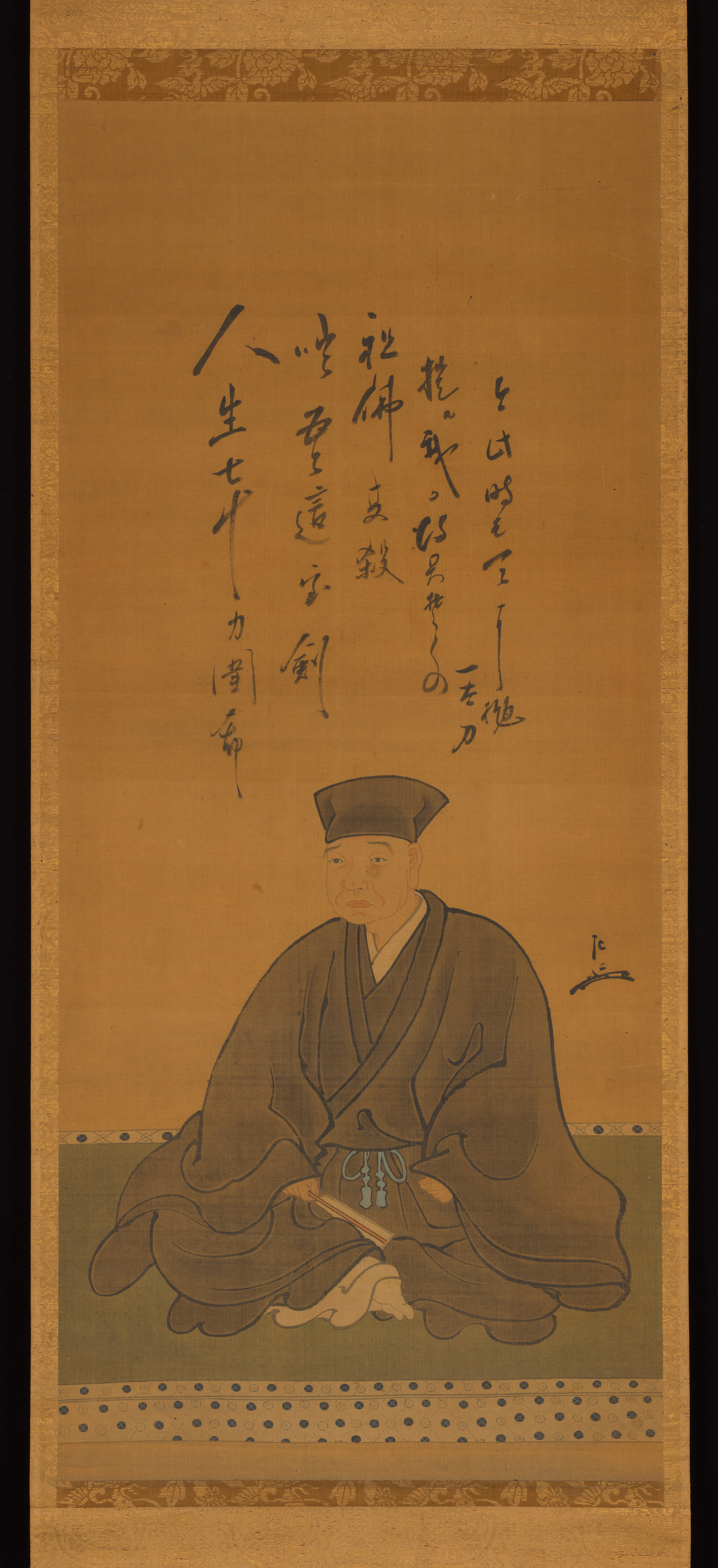
Sen no Rikyū, unidentified artist, 17th century. The Metropolitan Museum of Art, CC0.
While learning about matcha and its history, we recently encountered Sen no Rikyū (千利休). Through him, we began to understand that the bowl, room, gesture, meeting between host and guest, and even the empty space around them can belong to one experience.
Rikyū was not only a tea master, but a master of beauty who reshaped objects, space and hospitality.
Tea as a Complete Art
Rikyū was born in 1522 in Sakai, a prosperous merchant city and centre of international trade. He lived when rulers demonstrated authority through culture as well as power. He served Oda Nobunaga and Toyotomi Hideyoshi, yet his mature taste moved from grandeur toward smaller rooms, subdued materials and direct encounters.
Rikyū did not introduce tea to Japan. Tea and Zen Buddhism had travelled from China centuries earlier, while earlier masters had developed wabi-cha (侘び茶). Rikyū inherited and edited this history.
Chadō (茶道), the Way of Tea, is therefore a composite art. Architecture, ceramics, calligraphy, flowers, food and etiquette meet within one gathering.
A Culture Created Through Encounters
Rikyū's aesthetic did not emerge from isolation. From China came tea, Zen thought, ink painting and admired karamono (唐物). From Korea came ceramic forms that profoundly affected Japanese tea. These met Japanese clay, wood, bamboo, paper, architecture and customs.
Rikyū did not deny these origins. He selected, reinterpreted and placed them into a new relationship.
Portuguese traders and Jesuit missionaries were also arriving. Christianity entered some tea circles. It cannot be called the source of Rikyū's practice, but it belonged to his changing world.
Chinese, Korean, Japanese and European ideas existed within one society. This resembles multicultural Canada, where inherited habits meet new values.
In Metro Vancouver, 41.8% of residents were foreign-born in the 2021 Census. I am one of them. As an immigrant, I understand that daily life is shaped by adaptation and compromise: what we cook, use and value changes as different cultures meet.
prunus does not claim to represent every immigrant experience. We simply want to present another option—for people living between cultures, and for local customers interested in bringing unfamiliar cultural objects into everyday life.
Beyond Prestige
Before wabi-cha, gatherings could centre on Chinese utensils whose provenance carried enormous weight. Rikyū did not reject every valuable object. He challenged the idea that the most expensive must be the most beautiful or appropriate.
Through mitate (見立て)—seeing beyond an object's original category—tea practitioners reconsidered Korean bowls and everyday forms because they felt right in use.

National Treasure, Ō-Ido tea bowl Kizaemon (国宝 大井戸茶碗 銘 喜左衛門), Korea, 16th century. Kohō-an, Kyoto. Public-domain image.
This was not a celebration of poor workmanship. Wabi-sabi does not make every distorted or careless object beautiful. Rikyū's simplicity was disciplined, depending on selection, proportion, material understanding and skill.
One of the Seven Rules (利休七則) traditionally attributed to Rikyū begins:
「茶は服のよきように点て。」
"Prepare the tea so it is pleasing to drink."
The point is direct: the object and the host's skill must serve the person receiving the tea.
Imperfection can give an object character, but it does not excuse uncertain function or quality. Food safety cannot be judged from irregular shape alone; it depends on clay, glaze, firing and surface stability. An uneven vessel may be accomplished and safe, while a visually perfect one may be poorly made. The distinction is intentional, informed making versus uncontrolled quality.
Reduction as a Way of Seeing
Rikyū's aesthetic was not merely a preference for fewer possessions or empty-looking rooms. Reduction had a purpose: to make attention more precise.
The story of his morning glories expresses this idea. Hideyoshi reportedly expected a garden filled with flowers but found one morning glory inside the tea room. Whether history or parable, abundance impresses; one flower asks us to truly see it.
Another of Rikyū's Seven Rules says:
「花は野にあるように。」
"Arrange the flowers as they are in the field."
This does not mean copying nature carelessly. It means allowing one flower to carry the vitality of the larger landscape.
This is close to ma (間), the interval between things. It is not simply emptiness. Unfilled space allows light to change, air to move and one object to exist without being overwhelmed.
The same principle appears in Hasegawa Tōhaku's Pine Trees (松林図屏風): unpainted paper becomes air, distance and time.

Hasegawa Tōhaku, Pine Trees (松林図屏風), 16th century. Tokyo National Museum. National Treasure; public-domain image.
Subtraction matters only when what remains becomes clearer. A quiet room is not automatically beautiful, just as a simple bowl is not automatically practical.
Where Rikyū and prunus Meet
prunus was not created to follow Japanese aesthetics, and our approach did not begin with Rikyū. It came through living in Canada: valuing directness, practicality, cultural openness and giving people room to decide what works for them. Rikyū later gave us historical language for values that already felt familiar.
prunus does not sell the most expensive vessels or build a collection around prestige. We select cost-effective, practical tableware intended for repeated use. Materials and craftsmanship matter when they affect safety, durability, comfort and function, but they are not automatic proof of beauty. Nor do we treat irregularity as quality by itself.
A difficult technique, a famous name or a high price cannot decide whether a bowl fits your hands, habits or home. At the same time, a romantic story about imperfection should never hide weak craftsmanship or uncertain quality.
The choice remains yours.

This is where Rikyū's sensibility and ours meet: not through imitation or the belief that inexpensive is always better, but through the conviction that prestige should not stand between a person and an object.
Beauty does not need to announce its value. Sometimes it becomes visible only when unnecessary messages are removed and someone begins to use the object.

.%20Through%20him,%20we%20began...)
Leave a comment
This site is protected by hCaptcha and the hCaptcha Privacy Policy and Terms of Service apply.